Hardness is a critical property that significantly impacts the performance of high-frequency welded fin stainless steel tubes. As a supplier of these tubes, I have witnessed firsthand how variations in hardness can lead to different outcomes in various applications. In this blog, we will explore in detail how hardness affects the performance of high-frequency welded fin stainless steel tubes. High-frequency Welded Fin Stainless Steel Tube

1. Understanding Hardness in High – frequency Welded Fin Stainless Steel Tubes
Hardness can be defined as the material’s resistance to local deformation, such as indentation, abrasion, or scratching. In the context of high – frequency welded fin stainless steel tubes, hardness is influenced by several factors. The chemical composition of the stainless steel is a primary factor. Elements like carbon, chromium, nickel, and molybdenum can have a profound impact on hardness. For example, an increase in carbon content generally leads to an increase in hardness. Heat treatment processes also play a crucial role. Quenching, tempering, and annealing can all be used to adjust the hardness of the tubes.
Another significant factor is the manufacturing process of high – frequency welding. The heat generated during the welding process can cause changes in the microstructure of the stainless steel, which in turn affects hardness. If the welding parameters are not properly controlled, it can result in uneven hardness distribution along the tube and in the fin area.
2. Impact on Mechanical Strength
The hardness of high – frequency welded fin stainless steel tubes is closely related to their mechanical strength. Generally, a higher hardness value indicates a greater resistance to external forces. Tubes with higher hardness can withstand higher tensile and compressive loads without undergoing permanent deformation.
In applications where the tubes are subject to high – pressure conditions, such as in industrial pipelines for transporting fluids or gases, a high – hardness tube is essential. It can prevent the tube from bursting or deforming under pressure, ensuring the safety and reliability of the entire system. For example, in a chemical processing plant, high – pressure steam is often transported through these tubes. A tube with sufficient hardness can resist the high – pressure steam, reducing the risk of leaks and system failures.
However, it’s important to note that there is a trade – off between hardness and ductility. As the hardness of the tube increases, its ductility decreases. Ductility is the ability of the material to deform plastically without fracturing. In some applications where the tubes need to be bent or formed into specific shapes during installation, excessive hardness can make the tubes brittle and more prone to cracking. So, a balance must be struck between hardness and ductility based on the specific requirements of the application.
3. Wear Resistance
Wear resistance is another important performance aspect affected by hardness. High – frequency welded fin stainless steel tubes are often used in environments where they are exposed to abrasive materials. In applications such as heat exchangers where the tubes come into contact with dirty water or abrasive particles, or in industries where the tubes are used in conveyor systems and are subject to friction, a high – hardness tube can provide better wear resistance.
Harder materials are more resistant to abrasion because they can better withstand the cutting and plowing action of abrasive particles. A tube with a high – hardness surface can maintain its integrity for a longer time, reducing the need for frequent replacements. This not only saves on replacement costs but also reduces downtime in industrial processes.
On the other hand, if the hardness is too high, it can lead to increased wear on the mating parts. For example, in a heat exchanger where the finned tubes are in contact with other components, an overly hard tube can cause accelerated wear on the adjacent parts, leading to a shorter service life of the entire system. Therefore, an optimal hardness level needs to be determined to achieve the best overall wear – resistance performance.
4. Corrosion Resistance
The relationship between hardness and corrosion resistance in high – frequency welded fin stainless steel tubes is complex. In general, stainless steel owes its corrosion resistance to the formation of a passive oxide film on its surface. The hardness of the material can influence the formation and stability of this passive film.
A proper hardness level can help maintain the integrity of the passive film. If the tube is too soft, it may be more prone to surface scratches and damage, which can break the passive film and expose the underlying metal to corrosive agents. Conversely, if the hardness is extremely high, the material may be more brittle and the passive film may be more likely to crack under stress, also reducing corrosion resistance.
For example, in marine applications where the tubes are constantly exposed to saltwater, finding the right balance of hardness is crucial. A tube with an appropriate hardness can resist both mechanical damage and corrosion, providing long – term durability in a harsh environment.
5. Weldability
Hardness also has a significant impact on the weldability of high – frequency welded fin stainless steel tubes. During the welding process, the heat affected zone (HAZ) experiences changes in microstructure and hardness. If the base material has a very high hardness, the HAZ may become even harder and more brittle, increasing the risk of cracking.
Excessive hardness can also make it difficult to achieve a good fusion between the welded parts. Welding parameters need to be carefully adjusted according to the hardness of the tubes. For example, a higher – hardness tube may require a higher welding current and longer welding time to ensure proper fusion without creating excessive brittleness in the HAZ.
In some cases, post – weld heat treatment may be necessary to relieve stress and adjust the hardness in the HAZ. This is especially important for applications where the integrity of the weld joint is crucial, such as in high – pressure vessels or structural components.
6. Thermal Conductivity
The hardness of high – frequency welded fin stainless steel tubes can also affect their thermal conductivity. Generally, as the hardness of the material increases, its thermal conductivity tends to decrease slightly. This is because the microscopic structure changes associated with increased hardness can impede the flow of heat through the material.
In heat exchanger applications, where efficient heat transfer is essential, a lower thermal conductivity can be a drawback. However, in some cases, the increased strength and wear resistance provided by higher hardness can offset the slight reduction in thermal conductivity. For example, in a heat exchanger used in a high – abrasion environment, a tube with higher hardness can last longer, even if it has slightly lower thermal conductivity.
7. Conclusion and Call to Action
In conclusion, the hardness of high – frequency welded fin stainless steel tubes has a far – reaching impact on their performance in various aspects, including mechanical strength, wear resistance, corrosion resistance, weldability, and thermal conductivity. As a supplier, we understand the importance of providing tubes with the right hardness for different applications.
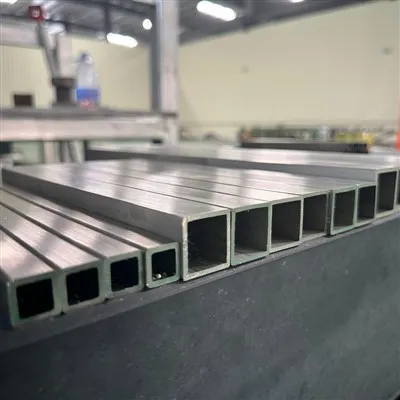
We have a team of experienced engineers and technicians who can precisely control the hardness of our tubes through advanced manufacturing processes and strict quality control. Whether you need tubes for high – pressure pipelines, heat exchangers in harsh environments, or other specific applications, we can offer customized solutions to meet your requirements.
Straight Stainless Steel Tube If you are interested in our high – frequency welded fin stainless steel tubes and would like to discuss your specific needs, we welcome you to contact us for procurement negotiations. We are committed to providing you with high – quality products and professional technical support to ensure the success of your projects.
References
- ASM Handbook Volume 1: Properties and Selection: Irons, Steels, and High – Performance Alloys.
- Welding Metallurgy and Weldability of Stainless Steels by John C. Lippold and David J. Kotecki.
- Corrosion Resistance of Stainless Steels by George S. Choksi.
China Super Tech Co., Ltd.
As one of the most professional high-frequency welded fin stainless steel tube manufacturers and suppliers in China, we’re featured by quality products and good service. Please rest assured to wholesale OEM high-frequency welded fin stainless steel tube from our factory. Also, custom service is available.
Address: Wangjing Science and Technology Park, Guangshun North Street, Chaoyang District, Beijing
E-mail: sales@316liquidcooling.com
WebSite: https://www.316liquidcooling.com/
