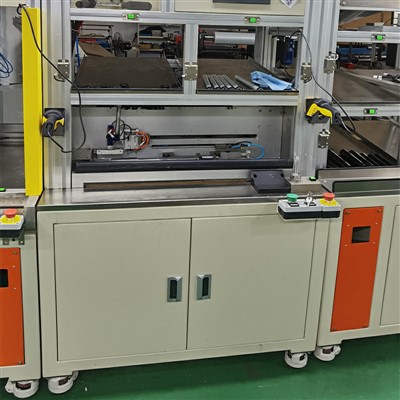
In the automotive industry, production equipment serves as the backbone of manufacturing operations, directly influencing product quality, production efficiency, and cost control. As a seasoned supplier of automotive industry production equipment, I have witnessed firsthand the critical role that performance indicators play in evaluating the effectiveness and efficiency of these machines. In this blog, I will delve into the key performance indicators of automotive production equipment, shedding light on their significance and how they impact the overall manufacturing process. Automotive Industry Production Equipment
1. Overall Equipment Effectiveness (OEE)
Overall Equipment Effectiveness (OEE) is one of the most widely used performance indicators in the manufacturing industry, including automotive production. It is a comprehensive metric that measures the actual productive use of a machine, taking into account three factors: availability, performance, and quality.
Availability refers to the percentage of time that a machine is available for production. It is calculated by dividing the actual operating time by the planned production time, excluding scheduled maintenance, breakdowns, and other unplanned stoppages. A high availability rate indicates that the machine is reliable and can operate continuously without significant interruptions.
Performance measures the speed at which a machine operates compared to its designed capacity. It is calculated by dividing the actual production output by the ideal production output, considering the theoretical cycle time of the machine. A high performance rate indicates that the machine is operating efficiently and can produce a large number of parts within a given time frame.
Quality represents the percentage of good parts produced by the machine compared to the total number of parts produced. It is calculated by dividing the number of good parts by the total number of parts produced, excluding defective parts. A high quality rate indicates that the machine is capable of producing parts that meet the required specifications and quality standards.
OEE is calculated by multiplying the availability, performance, and quality rates together. A perfect OEE score is 100%, which means that the machine is operating at its maximum potential, producing good parts at the fastest possible speed without any downtime. In reality, achieving a 100% OEE score is extremely difficult, but most automotive manufacturers aim for an OEE score of 85% or higher.
2. Cycle Time
Cycle time is another important performance indicator in automotive production. It refers to the time required to complete one cycle of a manufacturing process, from the start of one operation to the start of the next operation. In automotive production, cycle time is critical because it directly affects the production rate and efficiency of the entire manufacturing process.
A shorter cycle time means that more parts can be produced within a given time frame, resulting in higher production output and lower production costs. However, reducing cycle time is not always easy, as it requires optimizing the manufacturing process, improving the efficiency of the equipment, and minimizing the time spent on non-value-added activities such as setup, changeover, and inspection.
To reduce cycle time, automotive manufacturers often use techniques such as lean manufacturing, Six Sigma, and Just-In-Time (JIT) production. These techniques focus on eliminating waste, improving process flow, and reducing the time spent on non-value-added activities, resulting in shorter cycle times and higher production efficiency.
3. Throughput
Throughput is the rate at which a production system can produce finished products over a given period of time. It is calculated by dividing the total number of finished products produced by the total time taken to produce them. In automotive production, throughput is a critical performance indicator because it directly affects the ability of the manufacturer to meet customer demand and deliver products on time.
A high throughput rate indicates that the production system is operating efficiently and can produce a large number of finished products within a given time frame. However, achieving a high throughput rate requires optimizing the entire manufacturing process, from raw material procurement to finished product delivery. This includes ensuring the availability of raw materials, minimizing production bottlenecks, and improving the efficiency of the equipment.
To improve throughput, automotive manufacturers often use techniques such as capacity planning, production scheduling, and inventory management. These techniques focus on ensuring that the production system has the necessary resources and capacity to meet customer demand, while minimizing inventory levels and production lead times.
4. Scrap Rate
Scrap rate is the percentage of defective parts produced by a production system compared to the total number of parts produced. It is an important performance indicator in automotive production because it directly affects the cost of production and the quality of the finished products.
A high scrap rate indicates that the production system is producing a large number of defective parts, which can result in higher production costs, longer production lead times, and lower customer satisfaction. To reduce the scrap rate, automotive manufacturers often use techniques such as quality control, process improvement, and preventive maintenance.
Quality control involves inspecting and testing parts at various stages of the manufacturing process to ensure that they meet the required specifications and quality standards. Process improvement focuses on identifying and eliminating the root causes of defects in the manufacturing process, such as machine malfunctions, improper tooling, and operator errors. Preventive maintenance involves performing regular maintenance on the equipment to prevent breakdowns and malfunctions, which can lead to the production of defective parts.
5. Maintenance Cost
Maintenance cost is the total cost incurred by a production system for the maintenance and repair of its equipment. It is an important performance indicator in automotive production because it directly affects the profitability of the manufacturing operation.
A high maintenance cost indicates that the production system is experiencing frequent breakdowns and malfunctions, which can result in higher production costs, longer production lead times, and lower customer satisfaction. To reduce the maintenance cost, automotive manufacturers often use techniques such as preventive maintenance, predictive maintenance, and condition-based maintenance.
Preventive maintenance involves performing regular maintenance on the equipment at predetermined intervals to prevent breakdowns and malfunctions. Predictive maintenance involves using data analytics and sensor technology to monitor the condition of the equipment and predict when maintenance is required. Condition-based maintenance involves performing maintenance on the equipment only when it is actually needed, based on the condition of the equipment.
Conclusion
In conclusion, the performance indicators of automotive production equipment play a critical role in evaluating the effectiveness and efficiency of the manufacturing process. By monitoring and optimizing these performance indicators, automotive manufacturers can improve product quality, increase production efficiency, reduce production costs, and enhance customer satisfaction.
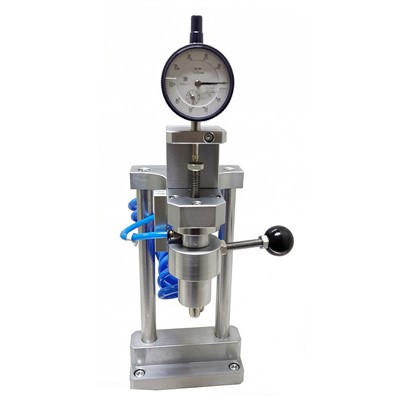
As a supplier of automotive industry production equipment, I understand the importance of these performance indicators and am committed to providing our customers with high-quality equipment that meets their specific needs and requirements. Our equipment is designed to optimize OEE, reduce cycle time, increase throughput, minimize scrap rate, and lower maintenance cost, helping our customers to achieve their manufacturing goals and stay competitive in the global market.
Packaging Industry Production Equipment If you are interested in learning more about our automotive production equipment or would like to discuss your specific needs and requirements, please do not hesitate to contact us. We look forward to the opportunity to work with you and help you take your automotive manufacturing operation to the next level.
References
- Nakajima, Seiichi. Introduction to TPM: Total Productive Maintenance. Productivity Press, 1988.
- Montgomery, Douglas C. Introduction to Statistical Quality Control. John Wiley & Sons, 2017.
- Liker, Jeffrey K. The Toyota Way: 14 Management Principles from the World’s Greatest Manufacturer. McGraw-Hill, 2004.
Shanghai Zenyan Automation Engineering Co., Ltd.
As one of the leading automotive industry production equipment manufacturers in China, we warmly welcome you to buy advanced automotive industry production equipment made in China here from our factory. All customized machines are with high quality and low price. Contact us for quotation.
Address: 3rd Floor, Building A, No.5629 Beisong Road, Chedun Town, Songjiang District, Shanghai, China
E-mail: zenyan_sh@163.com
WebSite: https://www.zenyanauto.com/
