If you’ve ever visited a small neighborhood market in a mid-sized city or watched a delivery driver weave through city streets with a stack of packages strapped to a three-wheeled cart, you’ve likely seen an electric tricycle hard at work. Over the last five years, we’ve had more and more small business owners, fleet managers, and even community leaders reach out to us asking the same question: How far can an electric tricycle really go on a single charge? As a supplier who’s worked with hundreds of customers across urban and semi-rural settings, I don’t just give a one-size-fits-all number – this answer depends on a dozen small, practical details that can make or break whether a tricycle works for your daily needs. Let’s break this down like we would for a new delivery driver or a shop owner trying to plan their route for the week. Electric Tricycle

First, let’s start with the core component that dictates range: the battery. Not all batteries are equal, and we see this mistake all the time – a customer comes in asking for a tricycle that can go 100 miles, only to find out that’s a spec listed under perfect, unrealistic conditions. Our most common battery offering is a 48V 20Ah lithium-ion pack, the same type used in many mid-range electric bikes, but scaled to handle the extra weight of a tricycle. On flat pavement, no load, and riding at a steady 15 mph (the speed limit for most light electric vehicles in residential areas), this battery will get around 45 to 50 miles. That’s more than enough for a local baker making rounds to six neighborhood shops, or a courier delivering 20 packages in a single city. But here’s the catch: when you add weight, that number drops fast. A standard adult tricycle with just one rider will see a 10% to 15% drop in range, but add 200 pounds of delivery boxes, coolers, or construction tools, and that range falls to 30 to 35 miles. For heavy-duty use, we offer an optional 48V 30Ah battery, which boosts that flat, no-load range to 65 to 70 miles, and can haul the same 200-pound load for up to 45 miles – a game-changer for delivery routes that span 50+ miles a day.
Another big factor is terrain. If you’re riding on perfectly paved, flat city streets, your range will be at the top end of any spec sheet we provide. But if you’re working in a hilly area, or on dirt farm roads, those numbers shift drastically. We had a farmer in a nearby rural county come to us last year, saying he needed a tricycle to haul feed and tools between his fields, which meant navigating unpaved, slightly hilly paths. We fitted him with the same 48V 30Ah battery he’d initially asked for, and on flat pavement he would have gotten 65 miles, but on his farm roads, he only made it 38 miles before needing a charge. That’s not a flaw in the tricycle – that’s just physics. Every time you climb a hill, you use extra battery power to fight gravity, and unpaved surfaces add more resistance because the tires sink slightly into dirt or gravel. For anyone working in semi-rural or hilly areas, we always recommend adding 10 to 15 miles of buffer to their expected range, because those small terrain details add up fast.
Riding style also has a huge impact, and this is one of the most overlooked factors in range calculations. A delivery driver who starts and stops every block, accelerating quickly to keep up with traffic and slamming on brakes for red lights, will use far more battery than someone who rides at a steady, consistent speed. We’ve tested this with our fleet models: the same tricycle, same load, same battery, will go 25% further for a driver who uses gentle acceleration and regenerative braking (a feature that most of our tricycles have, which captures energy when you brake and feeds it back to the battery) than for a driver who zips and stops constantly. We teach every new fleet customer how to adjust their riding style to extend range – simple things like anticipating stop signs, using lower speed settings when not in a hurry, and keeping tires properly inflated (underinflated tires can reduce range by up to 10%, according to our in-house tests) can make a bigger difference than upgrading to a more expensive battery.
Wait, let’s talk about tire pressure for a second – that’s a small detail that’s easy to miss, but it’s one of the first things we check when a customer comes back saying their tricycle isn’t going as far as they expected. Tricycle tires are heavier than bike tires, and they carry more weight, so even 5 PSI below the recommended pressure (which is usually printed on the side of the tire) creates more rolling resistance. Last month, a local courier came in complaining that his new tricycle was only going 28 miles on a charge, when our spec sheet said it should go 35. We checked his tires, and they were 7 PSI low. After inflating them, he was able to get 34 miles right away, no other changes needed. It’s a tiny thing, but it’s free, and it makes a huge difference.
Weather is another factor that’s even more impactful than most people realize. Cold temperatures drain lithium-ion batteries much faster than warm temperatures – in fact, at 32°F, a typical lithium-ion battery will have about 20% less capacity than it does at 70°F. That means a tricycle that goes 50 miles in mild weather will only go 40 miles on a cold winter day, if it’s starting from a full charge. We’ve had customers in northern states tell us that they keep a spare battery in their truck for winter months, because if they’re doing a long route, they don’t want to get stuck halfway. Hot weather is less of an issue, but extreme heat (above 90°F) can also shorten battery life over time, though it doesn’t have as big an impact on single-charge range as cold does. We always advise customers in climates with extreme temperatures to plan their routes with shorter segments, and if possible, charge their tricycles indoors overnight to keep the battery at a consistent temperature.
Now, let’s get into the practical, real-world examples from our customers, because spec sheets can only tell part of the story. Last year, we supplied a fleet of 12 electric tricycles to a local meal delivery service that drops off hot meals to elderly residents in a city of 150,000 people. Their drivers have routes that average 40 miles a day, with stops every two blocks, and they carry coolers full of hot food that add about 150 pounds of extra weight. We fitted them all with 48V 30Ah batteries, and after three months of use, their average range is 42 miles on a single charge – almost exactly what we predicted, because they follow the tips we gave them about gentle acceleration and maintaining tire pressure. Another customer, a landscaper who uses his tricycle to carry small tools and trim between job sites in a semi-rural area, has a route that’s 50 miles of mixed pavement and gravel. He uses the same 30Ah battery, and he gets about 38 miles on a charge, which means he has to top up once mid-day, but he says that’s still cheaper than running a gas truck for his small routes.
What about charging time, by the way? Because range isn’t just how far you can go – it’s also how long it takes to get back to full power. Our standard batteries take about 6 hours to fully charge from empty, which is perfect for overnight charging: you plug it in when you get home at the end of the day, and it’s full when you wake up. For customers who need faster charging, we offer an optional fast charger that can get a battery to 80% capacity in 2 hours, which is ideal for mid-day top-ups if someone is doing a long route. Most of our customers stick with the standard charger, though, because it’s cheaper and fits perfectly into their daily routine.
A common question we get is: Can I get more range by adding a second battery? The short answer is yes, for heavy-duty use. We offer dual battery adapters that let you connect two standard 48V batteries, which doubles your range to around 80 to 90 miles on flat pavement, with light load. We have a few long-haul delivery customers who use these dual battery setups for routes that span 100 miles a day, though they do have to plan their charging stops more carefully. It’s important to note that adding a second battery adds weight, too – about 50 pounds per battery – so you’ll see a small drop in range from the extra weight, but it’s still a great option for people who need maximum range.
Now, let’s bust a few myths that we hear all the time. First myth: Electric tricycles can’t go as far as gas-powered ones, so they’re not worth it. Our customers tell us that even with a lower range, the operating cost is way cheaper: charging a tricycle for 50 miles costs less than $0.50, whereas a gas tricycle would cost $5 to $10 for the same distance. For small businesses, that adds up to thousands of dollars a year in savings, even if they have to charge mid-day occasionally. Second myth: More expensive batteries always mean more range. That’s not true – the most important thing is matching the battery size to your actual daily needs, not buying the biggest battery just because it’s there. If you only need to go 30 miles a day, a 20Ah battery is more than enough, and it’s lighter and cheaper than a 30Ah one.
Another thing we always emphasize is that range changes over time. Lithium-ion batteries lose a small amount of capacity every time they’re charged and discharged – after three years of regular use, a battery will have about 80% of its original capacity. That means a battery that started at 50 miles of range will be around 40 miles after three years, which is still enough for most daily routes. We offer battery replacement services for our customers, so if a battery does start to lose too much range, they don’t have to buy a whole new tricycle – just replace the battery, which saves a lot of money.
If you’re reading this, chances are you’re someone who’s considering switching to an electric tricycle for your business, or you already have one and are looking to get the most out of it. The key takeaway here is that there’s no “one-size-fits-all” answer to how far an electric tricycle can go on a single charge – it depends on your load, your route, your riding style, and even the weather. But by choosing the right battery size, keeping your tires inflated, riding smoothly, and planning for small adjustments, you can get the range you need to make your business run efficiently.
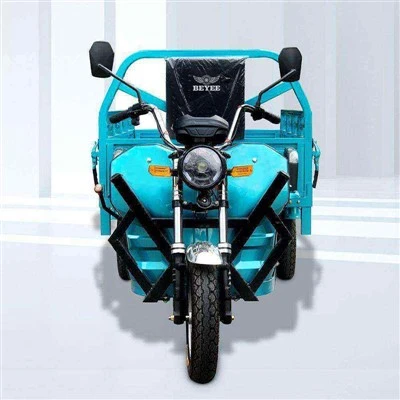
If you’re ready to learn more about which electric tricycle setup works best for your specific needs, or if you have questions about range, battery options, or fleet pricing, we’re here to help. We work with delivery companies, small business owners, agricultural operations, and community groups across the country, and we can help you tailor a solution that fits your daily routes, budget, and long-term goals. Reach out to our team to discuss your requirements and get a customized quote, and let’s find the right electric tricycle solution for you.
Electric Tricycle References
Electric Transportation Association. (2022). Lithium-ion Battery Performance and Range for Light Electric Vehicles. ETA Technical Report Series.
National Highway Traffic Safety Administration. (2021). Operating Characteristics of Light Electric Tricycles. NHTSA Vehicle Safety Research Report.
Battery University. (2023). Cold Temperature Effects on Lithium-ion Battery Capacity. Battery University Technical Brief.
Journal of Sustainable Transportation. (2022). Real-World Range Analysis of Electric Delivery Tricycles in Urban Environments. Volume 16, Issue 4.
Chongqing Beiyi Vehicle Co., Ltd.
With abundant experience, we are one of the most professional electric tricycle suppliers in China. We warmly welcome you to buy durable electric tricycle at competitive price from our factory. If you have any enquiry about pricelist, please feel free to email us.
Address: Area B, Luohuang Industrial Park, Jiangjin District, Chongqing.
E-mail: dayang@besttricycle.com
WebSite: https://www.beyeemoto.com/
