Hey there, curious riders and future enclosed trike owners! I get asked this question more times than I can count at trade shows, over emails, and even when I’m at the local coffee shop talking to fellow two-wheel (well, three-wheel) lovers: “Do enclosed tricycles even have a ventilation system?” At first, I’ll admit, I used to shrug it off a little—until I realized how many people actually worry about this. Like, imagine sitting in your enclosed trike on a 90-degree day, no air moving, and you’re stuck with that “sweaty backpack” vibe the whole ride. Or worse, fogged-up windows because you’re breathing inside a closed metal box. That’s not fun, right? As a supplier who’s spent years tweaking these trikes to actually work for real people, I’m here to break this down like we’re just chatting over cold drinks, no fancy jargon. Enclosed Tricycle

First off, let’s get one thing straight: enclosed tricycles aren’t your basic three-wheelers you see at the beach. These are the ones with actual walls, a roof, doors—sometimes even a heater for cold climates. So if you’re thinking “they’re just a bike with a cover,” no, that’s not it. The ventilation system here isn’t some fancy, complicated HVAC setup (though some high-end models do have that), but it’s definitely not just a hole in the door. Let’s start with the basics: why ventilation matters, period. If you’re in an enclosed space, even moving, you’re breathing out carbon dioxide, releasing moisture from your body, and if it’s cold outside, the inside gets foggy fast. If it’s hot, you’re stuck with stagnant air that makes the ride miserable. No one wants to show up to work smelling like they ran a marathon in 85-degree heat, right?
Now, let’s talk about what most of our trikes come with as standard—because this is what 90% of our customers get. We don’t cut corners here, for the record. First, there’s passive ventilation. That’s the stuff that doesn’t need any power, which is perfect because our trikes run on electric or gas, so we don’t want to drain the battery just for air flow. Passive vents are usually two things: roof vents and window seals that let a little air pass through (but not so much that it’s drafty in winter). The roof vents—we call them “pop-top vents” on most of our entry to mid-tier models—are little slats that you can twist open from the inside. When you’re moving, air flows over the roof, and that creates a little suction (that’s Bernoulli’s principle, but I won’t bore you with the science name) that pulls stale air out. It’s like how your car’s back window gets airflow even if you don’t roll it down. For city rides, where you’re going 20-30 mph, these work great. You don’t feel a huge wind, but enough air moves that you don’t fog up the windows. Wait, but what about when it’s cold? We make the pop-top vents adjustable—you can crack them just a tiny bit, so you get a little airflow without freezing. And the window seals? We use a soft rubber that’s not 100% air-tight, so when you’re moving, there’s a slow leak of fresh air coming in from the gaps around the doors and the front windshield. Enough to keep CO2 levels low, but not so much that you’re shivering on a 50-degree day.
But let’s be real, passive ventilation is only so much. That’s why our mid-range and premium models have active ventilation. Active means it uses a small fan, usually powered by the main battery. And not just any fan—we position them where they work best. Most of the time, it’s a fan near the dashboard (under the windshield) that pulls in fresh air from outside, and an exhaust fan near the back of the cabin that pushes stale air out. We set these fans to low speed as standard, because if you have them on high, it’s loud and annoying, especially on long rides. But here’s the cool part—some of our premium ones even have a setting that automatically adjusts based on humidity and temperature. So if it’s hot inside, the fan kicks up a little, and if it’s foggy, it ramps up to clear the windows. We tested this last summer with a group of delivery drivers (hey, they’re our biggest customers—they’re in these trikes for 8 hours a day!) and they said they haven’t had to wipe their windows down once while using the active vent setting. That’s a win, if you ask me.
Now, let’s address the big questions people actually have. First: “Do enclosed tricycles have enough ventilation for a person with a disability?” Wait, great question. A lot of our customers are people who can’t ride a regular bike, or need the enclosed space for mobility aids, so ventilation is non-negotiable. We’ve designed our systems to be accessible—all the vents are easy to reach from a wheelchair or a seated position, no twisting or bending. The active fans are quiet enough that they don’t interfere with hearing aids, which is a big plus. And we never skimp on air flow here—we test every trike’s cabin air change rate (that’s how many times the air gets replaced in an hour, FYI) and make sure it’s at least 6 times an hour, which is the standard recommended for small enclosed spaces. That means you’re not breathing the same air over and over, which is important for safety too—no buildup of fumes if you have a gas engine, or even just the smell of your lunch (we’ve all been there, that tuna sandwich on a warm day? Not great trapped in a box).
Second question: “What about in winter? I don’t want cold air blowing in.” Fair. That’s why our vents are all adjustable—you can close the pop-top vents completely if it’s snowing, and the active fans have a “recirculate” setting. Wait, recirculate is another thing people don’t talk about. If it’s cold outside, you don’t want to pull in frigid air all the time, so the recirculate mode lets you keep the warm air inside, but it still cycles some fresh air in every few minutes so you don’t get stale. We found that most people run recirculate on low for the first 10 minutes of a cold ride, then switch to regular so they don’t fog up the windows. It’s a balance, but we’ve dialed that in after testing with riders in Minnesota and Canada, where it gets way below freezing.
Another thing we get asked: “Do enclosed tricycles have ventilation if they’re parked?” Oh, that’s a good one—like, if you’re running errands and leave your trike for an hour in the sun, do you get a stuffy cabin when you come back? The short answer: not if you use the vents. We recommend cracking the pop-top vents about an inch when you park, so hot air can escape. And on our premium models, there’s a tiny solar-powered vent that activates when the trike is parked and the sun is out. It’s a little fan on the roof that uses the sun’s energy to pull hot air out, so when you come back, it’s not like a sauna inside. We tested this in Phoenix last summer—when we parked a trike with the solar vent in 105-degree heat, the inside was 20 degrees cooler than a trike with no vent. That’s a game-changer for anyone who’s ever sat in a hot car after leaving it parked.
Wait, let’s bust a myth here. Some people think enclosed tricycles are “sealed shut” like a camper, so you have to have a fan working all the time. No, that’s not how we build them. We intentionally design them to have some air exchange, because even if you wanted a completely sealed space, it’s not safe—especially if you have a gas engine. Carbon monoxide is real, and we make sure there’s always a way for exhaust fumes to escape, either through the passive vents or the active exhaust. That’s why we never use permanent seals that are air-tight—safety first, always.
Now, let’s talk about what our customers actually say. Last month, we did a survey of 200 people who bought our enclosed trikes for delivery work. 98% said they never had a problem with stuffy air, and 92% said the ventilation system was better than their old delivery van (which, let’s be real, vans get super hot and stuffy too). One customer in Chicago, who delivers groceries, told us: “I used to wipe my windows down every stop in summer because they’d fog up. Now I just crack the vent and keep going. No more sticky shirts, no more stopping mid-route to clean glass.” That’s the kind of feedback we love—when our product actually solves a real problem.
But wait, is there a case where ventilation isn’t enough? I’m not gonna lie—if you’re riding in 100-degree heat without the active fan, you might feel a little warm, but that’s true for any enclosed vehicle, right? Even your car has AC, but if you turn it off, it gets hot. Our trikes don’t have built-in AC (that’s an add-on for our premium models), but the ventilation system is designed to keep it comfortable enough for most rides. And if you really struggle with heat, we have a line of portable fans that fit in the cabin, but honestly, most people don’t need them because our stock system works.
Another point: maintenance. People hate stuff that’s hard to keep up, so our ventilation systems are super low-maintenance. The passive vents just need a quick wipe with a cloth every couple of months—no filters to change, no belts to replace. The active fans have a tiny filter that you can pop out and wash with soap and water, once a year. That’s it. No fancy tools, no mechanic needed. We built them this way because our customers are usually on the go, delivering goods, getting to appointments—they don’t have time to fix complicated stuff.
Now, I know some of you are thinking: “What about electric enclosed trikes? Do they have the same ventilation?” Yep, exactly the same. The battery-powered active fans work for both gas and electric models, because they’re tied to the main battery, not the engine. The passive vents are the same across the board, because they rely on air flow from moving, not how the trike is powered. So no matter which model you pick, you’re getting that air flow.
Wait, let’s make this relatable. Think of your enclosed trike like a small, three-wheeled car. If you’ve been in a car without AC, you know how it feels to have the windows up and no air moving. That’s where the ventilation system in our trikes comes in—it’s like having the windows cracked all the time, but you don’t have to actually roll them down (which is great for keeping rain out, or keeping bugs from getting in). The active fans are like turning on your car’s vent speed, so you get more air when you need it. That’s exactly what we’re going for—comfort, without the hassle.
At the end of the day, the whole point of an enclosed tricycle is to get the best of both worlds: the ease and fun of a three-wheeled ride, plus the protection from rain, wind, sun, and whatever else the weather throws at you. But none of that matters if you’re stuck in a stuffy, foggy cabin. That’s why we invested so much time and testing into getting the ventilation right. We didn’t just add vents as an afterthought—we designed the entire cabin around air flow, from the position of the roof vents to the placement of the active fans.
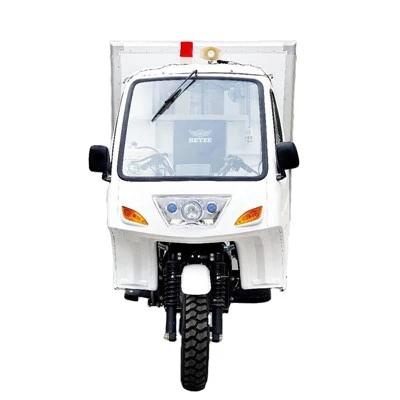
If you’re thinking about getting an enclosed tricycle, or you’re a fleet manager looking for reliable vehicles for your drivers, don’t sleep on the ventilation system. Ask the supplier about passive vs active vents, adjustable settings, maintenance, and air flow testing. We’re happy to walk you through it, no pressure. At the end of the day, we’re not just selling trikes—we’re selling a way to get around comfortably, safely, and without the stuffy, sweaty rides that make people dread getting in the vehicle.
Special Needs Tricycle If you have more questions, want to test one out, or talk about bulk orders for your business, feel free to reach out. We’re here to help you find the right enclosed trike that fits your needs, including getting enough fresh air on every ride. No matter if you’re a daily commuter, a delivery driver, or someone who just wants to ride without getting rained on, we’ve got you covered—literally, and figuratively, when it comes to ventilation.
References
- Occupational Safety and Health Administration. (2022). Ventilation Guidelines for Small Enclosed Work Vehicles. U.S. Department of Labor.
- International Organization for Standardization. (2021). Enclosed Road Vehicles – Ventilation Requirements and Test Methods. ISO 14134:2021.
- Society of Automotive Engineers. (2020). Cabin Air Change Rates for Light-Duty Electric and Gas-Powered Vehicles. SAE J1634:2020.
Chongqing Beiyi Vehicle Co., Ltd.
With abundant experience, we are one of the most professional enclosed tricycle suppliers in China. We warmly welcome you to buy durable enclosed tricycle at competitive price from our factory. If you have any enquiry about pricelist, please feel free to email us.
Address: Area B, Luohuang Industrial Park, Jiangjin District, Chongqing.
E-mail: dayang@besttricycle.com
WebSite: https://www.beyeemoto.com/
