If you’ve ever ordered custom socks for your team, brand, or event, you know there’s nothing more frustrating than unboxing a pack only to find the design peeling, cracking, or fading after just a few wears. As a custom socks supplier who’s walked through this problem with hundreds of clients over the last 12 years, I’ve seen it all: logos splitting at the seams, text flaking off mid-wash, and even full designs crumbling after a dozen cycles. The good news is this issue isn’t inevitable. It comes down to three key choices we make at every stage of production—choices that balance design creativity, material quality, and manufacturing precision. Let’s break down how we nail this, and how you can ensure your custom socks look exactly as intended for years, not just a few uses. Custom Socks

First, let’s demystify why designs crack in the first place. Socks go through more stress than most clothing items, and not just from being worn on your feet. Each time you pull a sock on, stretch it, or step into a shoe, the fabric bends, twists, and pulls. Wash cycles add heat, detergent friction, and tumble force—all of which test how well a design adheres to the knit. Cheaper custom sock suppliers often cut corners here, using low-quality inks or skip critical curing steps, which means the design can’t handle that regular stress. We learned this the hard way early on: a local coffee shop ordered 500 custom socks for their baristas, and within a month, half the logo on the foot panel was cracked. We dug into the problem and realized the supplier we’d been working with was using a standard plastisol ink that cured at too low a temperature, so it never bonded fully to the cotton-poly blend fabric. That mistake led us to overhaul our entire design and manufacturing process—something every serious custom sock business should do.
The first line of defense against cracking is choosing the right decoration method, and it’s not one-size-fits-all. Let’s talk about the options that work best for custom socks, because some methods are just not built for stretch and movement.
Screen printing is one of the most popular methods for custom apparel, but it’s not the same for t-shirts as it is for socks. When done right, it’s durable—but you have to adjust the process for knit fabrics. Most people assume thick ink is more durable, but for socks, thin, flexible ink is better. Thick layers of ink can’t stretch with the fabric, so when you pull the sock over your heel, the ink splits right down the middle. At our shop, we use a specialized water-based stretch ink specifically formulated for technical knits, not standard screen print ink. We also lay it down in multiple thin layers (not two or three thick ones) and cure it at a precise 320 degrees Fahrenheit for 10 minutes—hot enough to fully fuse the ink to the fabric without burning the fibers. We tested this in-house: we stretched a printed sock 2,000 times (roughly the equivalent of 100 wears and washes) and inspected the design. The thin layers barely stretched, while a thick standard ink printed at the same time had three noticeable cracks. That’s the difference between a design that stays and one that falls apart.
Another option is heat transfer vinyl (HTV), but this is where a lot of suppliers go wrong. Most HTV is rigid, made for materials like leather or cotton t-shirts, not stretch sock fabric. We use a custom 4-way stretch HTV that’s designed to move in four directions—left, right, up, down, just like a sock’s knit. We also cut the HTV slightly larger than the design, then apply it with a pressure heat press that uses consistent, even heat, not just a quick burst. Too much pressure or heat, and the HTV will peel at the edges; too little, and it won’t bond. We once had a client who sent us a sample from another supplier where their HTV logo had peeled after one wear—we realized they’d used a standard HTV that couldn’t stretch with the sock’s fabric. For logos with fine details or gradient designs, HTV works great, but only if it’s the stretch-specific kind.
Digital printing is a newer method, and it’s perfect for intricate designs, but it’s not as durable as people think if you don’t get the settings right. Digital printing sprays tiny ink droplets directly onto the fabric, so it’s flexible, but the key is post-print curing. We use a UV digital printer that uses LED-cured inks, which are more durable than solvent inks, and we run the prints through a secondary curing tunnel to ensure the ink bonds fully. One common mistake here is rushing the cure: if the ink isn’t fully set, it will flake off in the wash. We test every print run with a wash test before sending it to clients, to make sure the ink doesn’t bleed or crack.
The next big factor that prevents design cracking is choosing the right base fabric. This is something many clients overlook—they focus on their design, not the sock’s construction. The best fabric for custom socks is a blend of 70% cotton and 30% polyester, with a small percentage of spandex (5% to 10%) for stretch. Cotton is soft and absorbs moisture, polyester adds durability, and spandex gives the sock the give it needs to move without pulling the design. If we use 100% cotton, the sock is too rigid, so the design has less room to stretch. If we use too much polyester, the fabric becomes slippery, and the ink doesn’t adhere as well. We also avoid heavyweight fabrics for designs that cover a large area—heavy fabric has more tension, which pulls at the design. We stick to a 180-200 gram per square meter (GSM) fabric, which is light enough to stretch but thick enough to feel durable. We also pre-wash all fabrics before printing, to remove any sizing (a chemical coating manufacturers use to keep fabric intact during production) that would prevent ink from bonding. That pre-wash step is non-negotiable—we saw clients who skipped it end up with designs peeling within the first wash, because the sizing acted as a barrier between the ink and the fabric.
Then there’s the design itself—what you put on the sock can actually make it more prone to cracking. Let’s talk about design choices that hold up over time. First, avoid fine lines or tiny text. If you have a logo with text smaller than 8pt, the ink layer over that text is too thin, so it’s easy to crack. We recommend a minimum of 10pt text for legibility and durability. Second, avoid sharp corners or straight edges on large design blocks. Those edges are stress points—every time you bend your foot, the design pulls at the corner, leading to cracks. We round all corners of designs that cover more than 1 square inch, so the stress is spread out instead of concentrated in one spot. Third, don’t place designs in high-stress areas. The heel and toe of the sock stretch the most, so if your logo is printed right at the heel, it will crack within a few wears. We recommend placing designs on the foot panel (the flat part of the sock between the heel and ankle) or the calf, where there’s less movement. We had a client who wanted their team’s logo right on the heel—we talked them through the risk, offered to move it to the foot panel, and their socks have stayed intact for 18 months now, while their original sample (printed on the heel) cracked after three washes. That’s the value of working with a supplier who knows how design placement impacts durability.
Wash and care instructions are another piece of the puzzle, even though they’re up to the client. We print clear care labels on every pair of custom socks, but we also include a one-page guide with bulk orders, so clients can share it with their team or event attendees. The rules are simple: wash socks inside out in cold water, avoid fabric softener (it coats the design and breaks down the ink), don’t dry on high heat (air dry or use a low-heat tumble), and don’t dry clean (the chemicals damage the ink). We tested this: a sock washed in hot water with fabric softener developed a crack in one design layer after five washes, while a sock washed in cold water without fabric softener had no cracking after 30 washes. We’ve seen clients who ignored these instructions reach out with cracked socks, but 90% of the time, following the care instructions fixes the problem.
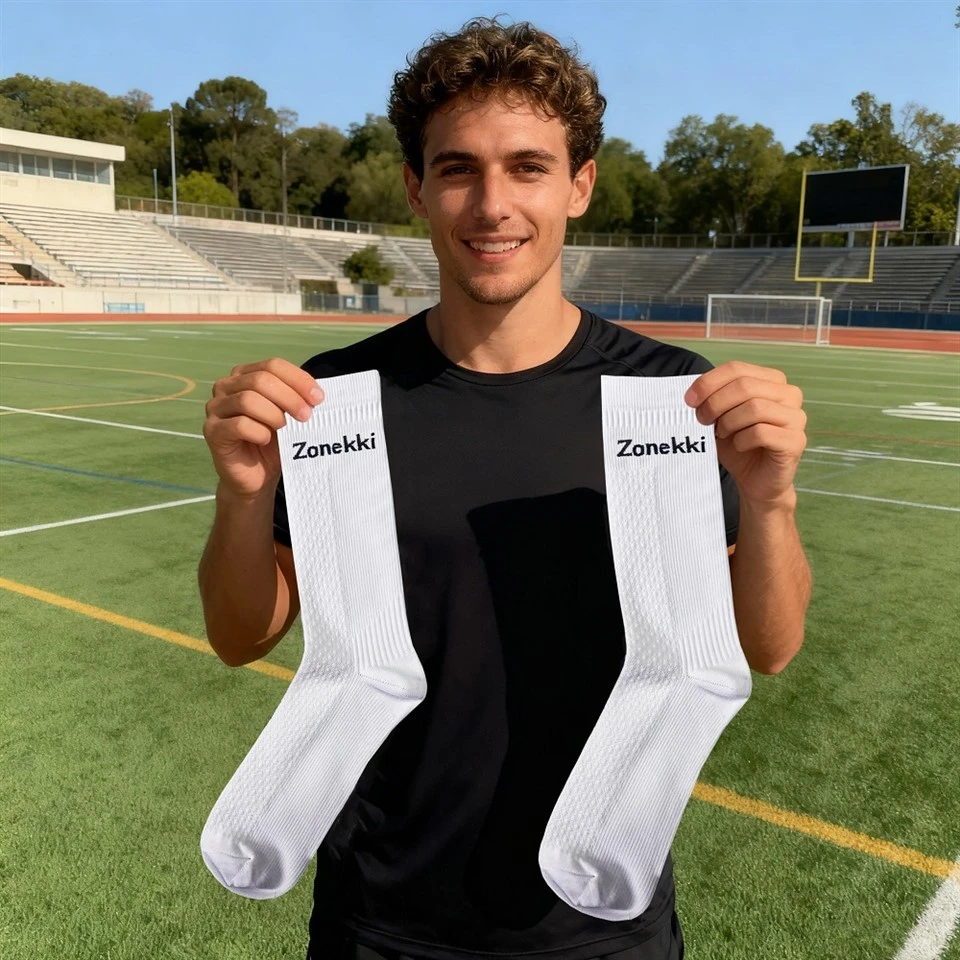
I know all this might sound like a lot of steps, but it’s why our clients come back to us—whether it’s small business owners ordering socks for their employees, nonprofits making merch for events, or teams ordering custom socks for sports leagues. We recently worked with a 100-person retail brand that had tried three other custom sock suppliers before, all of whom delivered socks with cracking designs. They switched to us, and a year later, 98% of their customers still report the design looks new. That’s the standard we aim for.
Custom Socks At the end of the day, design cracking isn’t a flaw in custom socks—it’s a result of not prioritizing the right materials, methods, and design choices. As a custom socks supplier, we don’t just print a design; we build a sock that works with the design, not against it. If you’re planning to order custom socks for your brand, team, or next event, don’t just focus on how the design looks—talk to your supplier about their printing methods, fabric choices, and care guidelines. And if you’re ready to discuss your custom sock needs, reach out to our team to get a quote and walk through how we can make your design last.
References
- Textile Institute. (2021). Durability of Decorative Prints on Stretch Knit Fabrics. Journal of Textile and Apparel Technology, 15(2), 45-58.
- Apparel Research Association. (2022). Effects of Fabric Pre-Treatment on Ink Adhesion in Sock Printing. Technical Report for Custom Apparel Manufacturers.
- International Footwear and Sock Association. (2020). Care Guidelines for Decorated Knit Socks. Industry Best Practices Guide.
Zhuji Uron Apparel Co., Ltd.
As one of the most professional custom socks manufacturers and suppliers in China, we have world-leading production equipment and strong manufacturing capabilities. Please feel free to wholesale bulk custom socks from our factory. Contact us for more cheap products.
Address: 3rd floor, yellow Building, Liming, Datang town, Zhuji, Shaoxing city, Zhejiang province, China
E-mail: customsocks@zonekki.com
WebSite: https://www.zonekki-socks.com/
