Let me start by setting the scene—last month, I spent a sweltering Saturday crawling through a Chicago alley with a city public works crew, prying up a dented, rusted manhole cover that had split during a delivery truck’s turn. As we hauled it to the back of their truck, the foreman, Joe, wiped sweat from his brow and said, “Most folks think these things are just iron lids. They have no clue how much they do.” That line stuck with me because it’s exactly why I want to break down the real purpose of a manhole cover—especially since my team and I supply these (and drain grates) to cities, contractors, and industrial sites across the Midwest. Manhole Cover and Drain Grate
I’ve been in this business for 12 years, and I’ll admit: when I first started, I thought the job was just making heavy round metal lids. But over time, I’ve learned every detail of what a manhole cover does—beyond just covering a hole in the ground. Let’s start with the basics, because that’s where most people get it wrong.
First and foremost, safety. That’s non-negotiable. A manhole access point leads to underground infrastructure: sewer lines, water mains, electrical conduits, gas lines, even telecom cables. Uncovered, that hole is a death trap. Last year, a small town outside Indianapolis had a sinkhole open up on a main street—they’d ignored a corroded cover for months, and it collapsed under a pedestrian. The cover wasn’t just a lid; it was the only barrier between the public and a 10-foot drop into sewage and utility lines. But safety isn’t just about covering a hole. It’s about load capacity, too. A standard residential manhole needs to hold 20,000 pounds; a main street cover has to handle 100,000+ pounds for semi-trucks. We test every cover we supply to make sure it meets that—no cutting corners here.
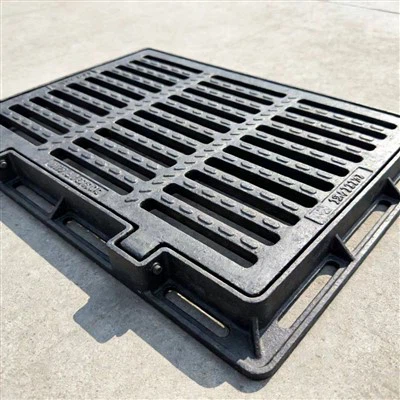
Then there’s the functional purpose of access. Utility workers can’t fix a broken water main or unclog a sewer line without getting down there. Manhole covers are designed to be pried up, but they’re heavy enough that they don’t budge on their own. We’ve had clients tell us they switched to our covers because the old ones were so light, they’d slide around and become hazards during heavy wind or snow plows. Drain grates, which are a big part of our business too, tie into this—they cover storm drains, letting water flow in but keeping leaves, debris, and small animals (or even kids’ toys) out of the pipes. I’ve seen too many storm drains clogged with trash, leading to basement floods in neighborhoods. A good drain grate prevents that.
Wait, there’s another purpose most people overlook: structural integrity. The ground under a city isn’t just dirt—it’s a network of pipes that shifts over time. A manhole cover sits in a frame that’s embedded in concrete, and it keeps the pavement around it from cracking. If a cover is worn or too thin, the asphalt around it will develop potholes within months. We use high-grade ductile iron for most of our covers because it’s flexible enough to handle shifting ground but strong enough to resist cracking. Last winter, a contractor called us in a panic—they’d installed cheap covers that cracked after the first freeze-thaw cycle, leaving 15 potholes on a new subdivision road. We rushed replacements, and they’ve held up through three more winters now.
I should also talk about what manhole covers aren’t for. No, they aren’t seats for street performers or tables for food trucks (though I’ve seen it happen in New York). They aren’t planters or decorative pieces—though some cities do use decorative covers for historical districts, those are special orders. Our bread and butter is heavy-duty, code-compliant covers that do the job they’re meant to. That’s why we work closely with the International Association of Plumbing and Mechanical Officials (IAPMO) and the American Society for Testing and Materials (ASTM) to make sure every product we ship meets national standards.
Let me circle back to that Chicago alley job. The cover we replaced was a standard 30-inch ductile iron cover, but it had an extra feature: a lifting eye. Joe told me that before they started using covers with lifting eyes, workers had to use crowbars, which could scratch the cover or even break it, leaving a sharp edge that was another hazard. Now, they just hook a portable winch to the eye, and it lifts straight up. That’s a small design choice, but it ties into the purpose: making both the cover safe and the work of utility crews easier. Drain grates have similar features—we make them with reinforced bars that don’t bend when a snow plow hits them, and they’re spaced so small animals can’t get stuck (the old standard was too wide, and we’d get calls from zoos about raccoons trapped in sewers).
Over the years, I’ve seen how important these products are. I remember a small rural town in Iowa that was dealing with constant sewer backups during heavy rain. Their old drain grates were spaced too far apart, and leaves would block them before the storm even hit. We supplied them with heavier, closely spaced grates that let water flow faster, and within a year, they had zero flood calls. That’s the purpose in action—simple, practical, saving a town money and frustration.
But here’s the thing: a lot of people don’t think about manhole covers until they need them. That’s why my team and I take pride in doing this right. We don’t sell cheap, thin covers that will fail in a few years. We don’t cut corners on load capacity or safety features. Because when a city installs a cover from us, they’re not just buying a metal lid—they’re buying peace of mind for their residents.
If you’re a city public works director, a contractor working on a new road, or a facility manager for a commercial space with underground utilities, you know how important it is to have reliable manhole covers and drain grates. You don’t want to be scrambling for replacements after a winter storm or a broken pipe. That’s why we keep a large inventory on hand, so we can ship orders quickly. We also work with you to figure out exactly what you need—whether you need heavy-duty covers for a highway, smaller grates for a parking lot, or custom sizes for a historical district.
At the end of the day, the purpose of a manhole cover is simple when you break it down: keep people safe, protect underground infrastructure, provide access for workers, and preserve the integrity of the pavement above. But the reality is, it takes a lot of skill and attention to detail to make a cover that does all those things well. That’s why my team has been doing this for so long—and why we’re here to help you with your next project. If you need manhole covers, drain grates, or just have questions about what’s right for your job, don’t hesitate to reach out to our team to discuss your procurement needs.
Flange References:
- International Association of Plumbing and Mechanical Officials (IAPMO) Uniform Plumbing Code, 2021 Edition
- American Society for Testing and Materials (ASTM) Standard Specifications for Ductile Iron Manhole Covers and Grates, ASTM A126-20
- Federal Highway Administration (FHWA) Manual on Uniform Traffic Control Devices (MUTCD), 2022 Edition
Shanxi Yuanhang Machinery Construction Industry and Trade Co., Ltd.
We’re well-known as one of the most experienced manhole cover and drain grate manufacturers in China. With a professional production team, we are able to meet the needs of the majority of our customers. Welcome to buy discount manhole cover and drain grate in stock here from our factory. Contact us for pricelist and free sample.
Address: Taiyuan City, Shanxi Province
E-mail: anzhiyuan@yhmadeinprc.com.cn
WebSite: https://www.yhmadeinprc.com/
